China Top 10 Source Chargers How to Reduce Energy Waste?

Time:2026-10-21 Author:Mason
0%

China’s charger industry is moving toward smaller, faster, and more efficient power solutions. Yet efficiency depends on daily use, not only factory specifications. A charger may waste electricity while plugged in, even when no device is connected. Heat from the adapter also reveals energy lost during conversion.

For readers asking, “How to reduce energy waste when using a source charger,” practical habits matter. Choose a charger with verified efficiency ratings and power output matching your device. An oversized charger is not automatically better. It can operate inefficiently at very low loads. Unplug it after charging. Avoid damaged cables, loose sockets, and poorly ventilated surfaces. A charger buried under clothing may become noticeably warm. That heat is wasted energy.

Dr. Alex Lidow, a power electronics expert and CEO of Efficient Power Conversion, has said, “The future of power electronics is wide bandgap semiconductors.” This principle supports the growing use of gallium nitride chargers, which can reduce conversion losses and physical size. However, newer technology is not a complete solution. A high-efficiency charger still wastes power when left connected continuously. Usage patterns remain important.

This guide examines China’s top ten source charger options through efficiency, safety, thermal performance, and long-term reliability. Laboratory figures can look impressive. Real homes are less controlled. Some devices charge slowly, remain warm, or stay connected overnight. That reality deserves attention. There is no perfect setup. Still, measuring standby consumption and changing a few habits can produce meaningful savings.
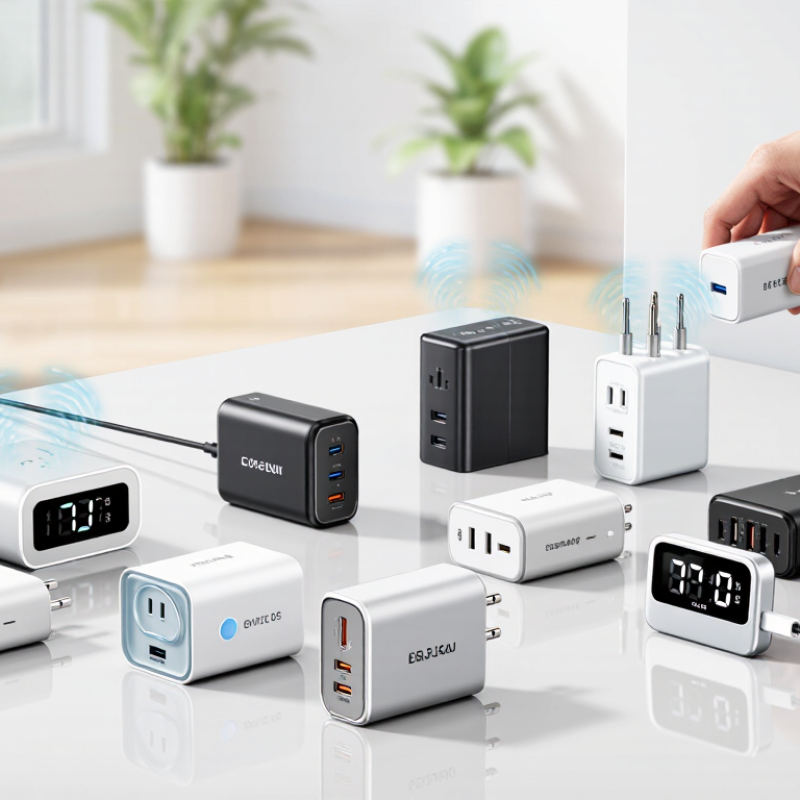
China Top 10 Source Chargers How to Reduce Energy Waste?

Understanding Energy Waste in Charger Production and Use

Energy waste in charger production begins long before a plug reaches a wall socket. Factories consume electricity while molding housings, soldering boards, testing output, and controlling production areas. Poor planning leaves machines warm and idle between batches. Scrap creates another hidden cost. Every rejected board carries wasted copper, plastic, labor, and transport energy. A reliable sourcing review should request energy records, defect rates, and maintenance logs. Numbers matter more than polished sustainability claims.

During factory checks, measure no-load power and conversion efficiency across several voltage ranges. A charger may perform well at full load but waste energy when a device is nearly full. Heat is a useful warning sign. Excessive warmth can indicate resistance, weak components, or inefficient circuit design. Engineers should inspect solder quality, transformer sizing, cable losses, and automatic power reduction. Test samples from different batches, not one perfect unit. Small detail. It can change the result.

Users also influence energy waste. Leaving chargers plugged in overnight increases standby consumption, even without a connected device. Damaged cables encourage replacement, while poor ventilation raises heat and shortens service life. Clear instructions can reduce these habits. Buyers should compare standby figures, repair support, packaging weight, and expected lifespan. I would not treat efficiency labels as complete evidence. Testing conditions vary, and published figures may omit real household behavior. That limitation deserves attention when evaluating charger suppliers in China.

Identifying China’s Top Charger Sources and Their Energy Profiles

China’s charger supply chain is concentrated in several manufacturing zones. Guangdong is strong in compact adapters and fast-charging assemblies. Jiangsu and Zhejiang add power components, cables, and testing services. Fujian also supports consumer-electronics production. These clusters matter because shorter supplier distances can reduce transport energy and simplify quality audits. However, “top source” should not mean the cheapest factory. It should describe verified efficiency, stable materials, and transparent testing.

Energy profiles differ by charger type. A compact USB-C adapter may lose energy through heat during high-power operation. An idle unit still consumes electricity when left plugged in. The European Commission’s Regulation 2019/1782 limits external power-supply no-load consumption to 0.10 watts for many low-power products. Its efficiency requirements also vary by rated output. The International Energy Agency reported about 3.6 million public charging points in China at the end of 2023, nearly two-thirds of the global total. That scale makes small efficiency improvements significant across fleets and households.

Ask factories for measured standby power, active efficiency, thermal images, and batch-level test records. Independent laboratory verification is stronger than a factory claim. Energy Star’s external power-supply requirements also provide a useful comparison framework for active and no-load performance. In practice, overspecification creates waste: a low-load device paired with a much larger adapter may run inefficiently. I have seen procurement teams focus on peak wattage while ignoring idle losses. That approach needs reconsideration. Better sourcing combines regional capability, realistic power ratings, repairability, and evidence from repeated tests.

Comparing Charger Efficiency, Standby Power, and Material Use

When sourcing chargers from China’s top suppliers, efficiency should be tested, not assumed. The European Commission’s Regulation (EU) 2019/1782 limits no-load power for many external power supplies to 0.10 watts below 49 watts. A charger still drawing power overnight wastes energy across millions of homes. Standby is invisible.

Active efficiency matters more during daily use. The U.S. Department of Energy has reported that improved external power supplies can reduce national electricity use by billions of kilowatt-hours annually. Ask suppliers for independent test reports covering efficiency at 10%, 25%, 50%, 75%, and 100% load. A charger that performs well only at full load may look impressive on paper. In practice, phones often charge below that level. This is where specifications can mislead.

Material choices also affect environmental performance. The Global E-waste Monitor 2024 recorded 62 million tonnes of electronic waste in 2022, while only 22.3% was formally collected and recycled. Chargers are small, but their plastics, copper, circuit boards, and packaging accumulate quickly. Prefer designs with fewer mixed materials, recyclable packaging, durable cables, and replaceable components where practical. However, “recyclable” does not guarantee local recovery. Suppliers should provide material declarations and realistic end-of-life guidance. I would also question ultra-light designs; less material can sometimes mean weaker heat management and shorter service life.

China Top 10 Source Chargers: How to Reduce Energy Waste?

Representative comparison of charger efficiency, no-load standby power, and approximate product mass as a material-use proxy. Higher efficiency and lower standby power reduce energy waste.

USB-C Power Delivery chargers generally achieve better conversion efficiency than older low-power USB-A designs. Energy Star-style external power supply benchmarks commonly require active-mode efficiency in the mid-to-high 80% range, while EU ecodesign rules limit no-load power to 0.10 W for many lower-power adapters and 0.21 W for higher-power models. Product mass is shown as an approximate material-use indicator because casing, heat sinks, connectors, and internal components vary by design.

Selecting Energy-Saving Chargers Through Standards and Specifications

Reducing energy waste starts with the charger’s specifications, not its appearance. When sourcing chargers from China, check rated efficiency at 10%, 25%, 50%, and 100% load. A model may perform well at full power but waste more energy during light use. No-load power matters too. Measure it with a calibrated power meter after the charger reaches standby mode.

Standards provide a safer screening method. For many markets, review IEC 62368-1 safety compliance and the relevant national requirements, such as GB 4943.1 in China. Check electromagnetic compatibility documents, including limits related to conducted emissions and power quality. USB-C Power Delivery specifications should match the advertised voltage and current. A 65-watt label means little if the output falls sharply with ordinary cables.

Ask suppliers for recent test reports, model-specific files, and production inspection records. Do not accept a certificate showing only a similar model. During sampling, test three or more units from different boxes. Observe heat near the plug after two hours at 80% load. Warm is normal; excessive heat deserves investigation. I have found that efficiency claims can change between revisions. That detail is easy to miss. A better process combines documents, measurements, and follow-up testing, although even this approach is not perfect. Specifications reduce uncertainty, but real usage still exposes weaknesses.

Applying Practical Steps to Reduce Charger-Related Energy Waste

China Top 10 Source Chargers: How to Reduce Energy Waste?

Reducing charger-related waste starts before purchase. When comparing Chinese charger suppliers, request measured no-load power, active efficiency, and standby data. The European Commission’s Regulation (EU) 2019/1782 limits external power supplies to 0.10 watts in no-load mode. Treat this as a baseline, not a marketing promise. Ask for independent laboratory reports and test samples from the same production batch.

Use chargers close to the device’s required power. An oversized adapter may waste energy during light loads, especially when left connected. The U.S. Department of Energy explains that external power supplies lose energy during conversion, even when equipment is not operating. In a small office, unplug chargers each evening, or use a switched power strip. A simple label can help: “Remove after charging.” Small actions matter.

Measure the real result. A plug-in watt meter can reveal whether an idle charger draws 0.1 watts or several times more. The International Energy Agency reports that electricity demand from digital devices and networks continues to rise, making efficiency controls increasingly important. The Global E-waste Monitor 2024 recorded 62 million tonnes of electronic waste in 2022. Longer charger life also reduces replacement waste. I sometimes forget to unplug mine. That weakness should be designed around, not ignored. Choose durable cables, repairable construction, and suppliers with traceable test records. Standards help, but daily behavior still decides the final outcome.

FAQS

Where does energy waste begin during charger production?

It begins in molding, soldering, testing, and factory climate control. Idle machines still consume electricity. Rejected boards waste copper, plastic, labor, and transport energy.

What factory records should buyers request?

Request energy records, defect rates, maintenance logs, and production downtime data. Numbers reveal more than polished sustainability claims.

How should charger efficiency be tested?

Test several samples from different production batches. Measure performance at 10%, 25%, 50%, 75%, and 100% loads. One perfect sample proves little.

Why does standby power matter?

A plugged-in charger can consume electricity without charging anything. Overnight use makes this small waste accumulate across many homes. Standby is invisible.

What does excessive charger heat indicate?

Excessive warmth may indicate resistance, weak components, or poor circuit design. Inspect solder joints, transformer sizing, cable losses, and automatic power reduction.

Can a charger perform well but still waste energy?

Yes. It may be efficient at full load but weaker when a phone is nearly full. Real household use often stays below maximum output.

How do materials affect environmental performance?

Chargers contain plastic, copper, circuit boards, cables, and packaging. Prefer durable cables, recyclable packaging, fewer mixed materials, and practical repair options.

Does “recyclable” guarantee proper recovery?

No. Local recycling systems may not accept every material. Ask for material declarations and clear end-of-life guidance.

Can lighter charger designs create problems?

Sometimes. Less material may weaken heat management and shorten service life. Light is not automatically better.

How can users reduce charger energy waste?

Unplug chargers when they are not needed. Keep them ventilated and replace damaged cables. Small habits matter. I would still question whether every efficiency label reflects real homes.

Conclusion

China’s top charger sources are increasingly evaluated not only by price and output performance, but also by their total energy profile. Energy waste can occur during manufacturing, conversion, charging, standby operation, and disposal. A responsible comparison should consider charging efficiency, no-load power consumption, material selection, product lifespan, and production practices. Chargers with efficient power conversion, durable components, compact designs, and recyclable materials can reduce unnecessary electricity use and environmental impact throughout their life cycle.

To choose an energy-saving charger, buyers should review recognized safety and efficiency standards, rated input and output specifications, standby power data, and compatibility with their devices. Practical habits also matter: unplug the charger when it is not needed, avoid charging in extreme temperatures, replace damaged cables, and select the correct power rating instead of excessive capacity. Understanding How to reduce energy waste when using a source charger helps users combine better purchasing decisions with daily energy-conscious behavior, reducing waste without compromising charging safety or convenience.

Mason

Mason

Mason is a seasoned marketing professional with a deep expertise in the company's offerings and a passion for driving brand awareness. With a strong background in digital marketing strategies, he has an innate ability to connect with diverse audiences and effectively communicate product benefits.......